
Robotic Partial Knee Replacement on Long Island — MAKOplasty® with Dr. Douglas M. Petraco, MD
Dr. Douglas M. Petraco, a board-certified orthopedic surgeon and joint replacement specialist, performs robotic-assisted partial knee replacement using the MAKOplasty® platform. This technology uses CT-based preoperative planning and robotic guidance to achieve precise implant positioning through a smaller incision than traditional total knee replacement, with most patients returning home the same day as their procedure.
Dr. Petraco serves patients across Long Island from offices in East Setauket, Riverhead, and Port Jefferson.

What Is Partial Knee Replacement?
Partial knee replacement addresses only the damaged compartment, replacing worn cartilage and bone with a small implant while leaving the healthy portions of the knee untouched. Compared to total knee replacement, partial knee replacement typically involves:
- A smaller surgical incision
- Less bone and tissue removal
- Faster recovery and earlier return to activity
- A more natural-feeling knee after recovery
- Shorter time at the surgical facility — most patients go home the same day
For patients who are not candidates for partial replacement, Dr. Petraco also offers total knee replacement on Long Island.
MAKOplasty® Robotic-Assisted Partial Knee Replacement
Dr. Petraco performs partial knee replacement using the MAKOplasty® robotic arm-assisted system, a technology he was instrumental in introducing to St. Charles Hospital as Director of the Orthopedic Surgery Department.
The MAKOplasty® process involves two key phases:
- Preoperative CT Scanning: Before surgery, a CT scan of the patient’s knee is used to create a three-dimensional model of the joint. This allows Dr. Petraco to plan the exact size, position, and alignment of the implant in advance, customized to each patient’s specific anatomy.
- Robotic-Guided Surgery: During the procedure, the robotic arm assists Dr. Petraco in executing the pre-planned surgical approach. The system helps ensure that bone removal stays within the boundaries defined during planning, reducing the likelihood of implant malalignment, a key factor in long-term outcomes.
The result is a more accurately placed implant through a smaller incision, which supports faster recovery and a more natural range of motion after surgery.
Are You a Candidate for Robotic Partial Knee Replacement?
Partial knee replacement with MAKOplasty® is most appropriate for patients whose knee arthritis is limited to one compartment and who have:
- Intact anterior cruciate ligament (ACL) and posterior cruciate ligament (PCL)
- A stable, correctable knee with no significant deformity
- Arthritis confirmed by imaging to be localized — not affecting the full joint
- Persistent knee pain that has not responded to conservative treatments such as physical therapy, anti-inflammatory medications, or injections
What to Expect: From Consultation Through Recovery
- Consultation and evaluation: Dr. Petraco reviews your history, examines the knee, and obtains imaging to assess joint damage and determine candidacy for partial replacement.
- CT scan and surgical planning: If MAKOplasty® is recommended, a CT scan is scheduled to build your individualized surgical plan.
- Surgery at Precision Care Surgery Center: Most partial knee replacements are performed at Dr. Petraco’s ambulatory surgery center in East Setauket, with patients typically discharged within three hours of their procedure.
- Rehabilitation: A personalized physical therapy program begins shortly after surgery, focused on restoring knee strength, range of motion, and confidence with walking and daily activities.
- Follow-up: Dr. Petraco monitors recovery through scheduled follow-up appointments to ensure the implant is functioning properly and that rehabilitation is progressing on track.
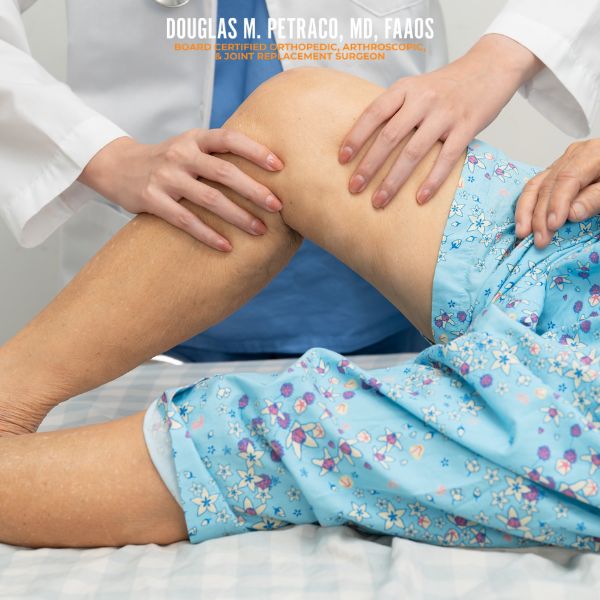
Partial knee replacement patients typically return to light daily activities within a few weeks. Many patients report a faster, less painful recovery than with total knee replacement, a direct benefit of the procedure’s less invasive nature.
Partial Knee Replacement vs. Total Knee Replacement: Which Is Right for You?
- Partial knee replacement: Appropriate when arthritis is isolated to one compartment, ligaments are intact, and the goal is to address localized pain with minimal disruption to healthy tissue.
- Total knee replacement: Recommended when arthritis affects multiple compartments, when there is significant deformity, or when prior partial replacement has failed.